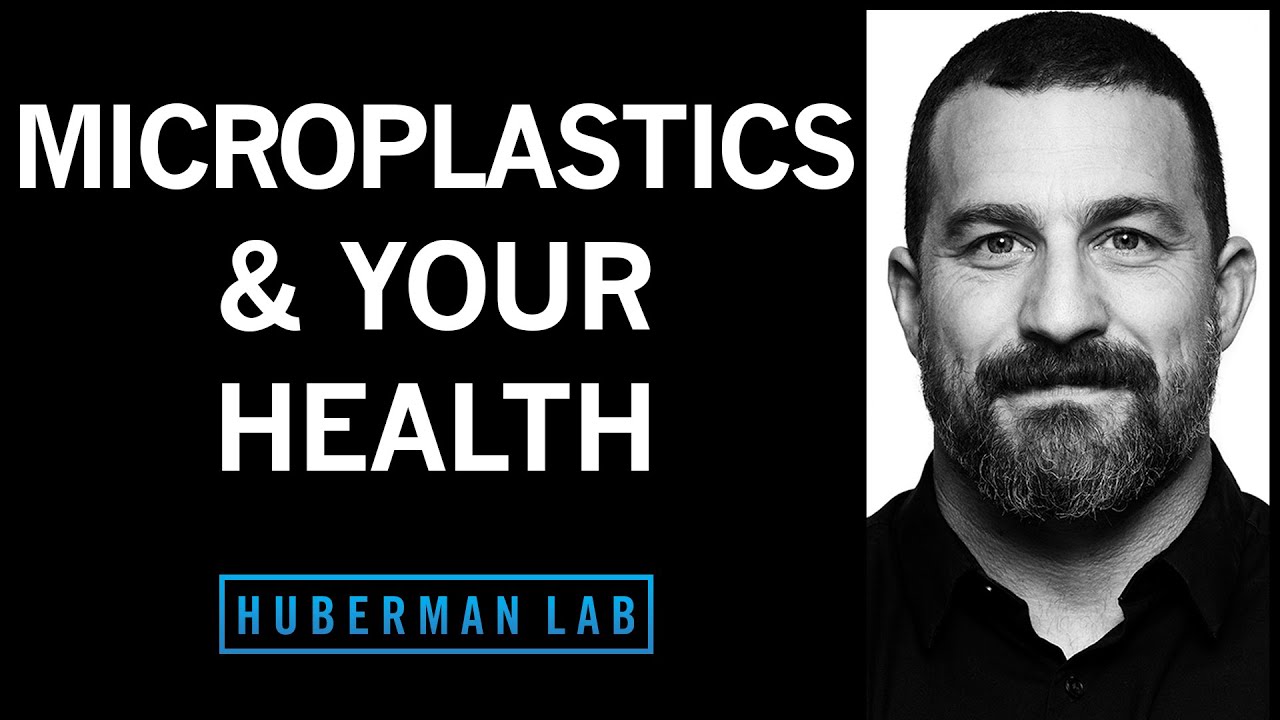
Andrew Huberman (solo) — Professor of neurobiology and ophthalmology at Stanford School of Medicine and host of the Huberman Lab podcast. This is a solo episode with no guest.
The gist
In this solo episode, Andrew Huberman explains what microplastics and nanoplastics are, how pervasive they are in air, water, food and consumer goods, and the postmortem evidence that they lodge in human brain, testes, ovarian follicles, liver, blood and even placenta and a newborn's first stool. He stresses that human data are correlative, not causal, and deliberately swings between alarming findings and reassurance to avoid being alarmist. He reviews correlative studies tying microplastics to irritable bowel syndrome, lowered testosterone (via phthalates), reduced sperm count/motility, and cardiovascular plaques, and explains endocrine disruptors BPA, BPS, phthalates and PFAS forever chemicals. The bulk of the episode is a hierarchy of actionable to-dos and to-avoids: skip plastic-bottled water, canned soup, sea salt, paper coffee cups, nonstick pans and microwave popcorn; use glass/steel/ceramic and reverse osmosis water; eat cruciferous vegetables or supplement sulforaphane; get dietary fiber; sweat; and buy/replace far less clothing.
Big reveals
- Cites a reanalysis arguing the famous 'credit card of plastic per week' claim was overestimated by a millionfold, saying it would take 23,000 years to accumulate that amount.
- States microplastics and nanoplastics cross the blood-brain, blood-testicular and blood-follicle barriers and were found in every postmortem human testicle analyzed.
- Quotes a study finding one serving of canned soup daily for 5 days was tied to a more than 1,000% increase in urinary BPA, and vows to stop eating canned soup.
- Postmortem adult brains contain about 0.5% of their weight in microplastics, roughly a teaspoon of salt's worth.
- Reveals carbonated water test data: Topo Chico 9.76, Perrier 1.1, San Pellegrino 0.31 PFAS particles per trillion, and says he's dropping Topo Chico.
- Names clothing microfibers shed in washing machines as possibly the single largest source of environmental microplastics, urging people to buy and discard far less clothing.
- Pushes back on media claims linking microplastics to autism and ADHD, calling that data very weak and far too early to conclude any causal role.
Things worth remembering
- Microplastics range from 1 micron up to 5 mm; anything below 1 micron is a nanoplastic.
- Bottled water was reestimated from ~30,000 to an average ~240,000 (up to 400,000) plastic particles per liter once imaging tools improved.
- BPA was banned from kids' sippy cups and food containers, yet microplastics still reach the fetus via the placenta and appear in a baby's first stool.
- A 2024 New England Journal of Medicine study found polyethylene in carotid artery plaques of about 58% of 150 patients.
- Sulforaphane from cruciferous vegetables like broccoli and cauliflower can enhance phase-two liver detoxification.
- Dietary fiber may help bind and excrete lipophilic endocrine disruptors like BPA, BPS and phthalates through the bowel.
- Receipts are rich BPA sources, and using hand lotion or sunscreen before handling them increases BPA absorption into the bloodstream.
- BPA, BPS and phthalates are endocrine disruptors that mimic or block estrogen and can bind androgen (testosterone) receptors.
- Sauna, hot baths, hot yoga and exercise-driven sweating may help remove some chemicals attached to microplastics.
Recommended in this episode
Books, products and media the guest or host genuinely endorsed here — with the buy link.
Affiliate link — we may earn a commission at no extra cost to you.
A Poison Like No Other: How Microplastics Corrupted Our Planet and Our Bodies
Matt Simon
“the title of the book is A Poison Like No Other: How Microplastics Corrupted Our Planet and Our Bodies by Matt Simon. And I listened to this book” — Andrew Huberman 00:27:24Find it on Amazon
Examine.com
Examine.com
“what I consider a really excellent website for thinking about and evaluating this kind of stuff, which is examine.com” — Andrew Huberman 01:05:03Find it on Amazon
Sulforaphane (supplement)
various
“in my case, after researching this episode, I opted to start taking 50 mg, 5 0 mg of sulforaphane per day. I'm going to see how that goes.” — Andrew Huberman 01:07:12Find it on Amazon
San Pellegrino
San Pellegrino (Nestle)
“Until I see data that Topo Chico has reduced the amount of these foreign contaminants to basically less than 0.31, I'm going with San Pellegrino or Perrier.” — Andrew Huberman 01:13:55Find it on Amazon
Guppyfriend Washing Bag
Guppyfriend
“There are the things like the Guppy Bag that you can I love the name, the Guppy Bag that you can buy at pretty low cost.” — Andrew Huberman 01:20:11Find it on Amazon
Hydroxyapatite tooth tablets
various
“these are tooth tablets that um include something called hydroxyapatite ... I love those. We'll provide a link to those” — Andrew Huberman 01:25:52Find it on Amazon
Protocols: An Operating Manual for the Human Body
Andrew Huberman
“I have a new book coming out. It's my very first book. It's entitled Protocols: An Operating Manual for the Human Body.” — Andrew Huberman 01:34:34Find it on Amazon