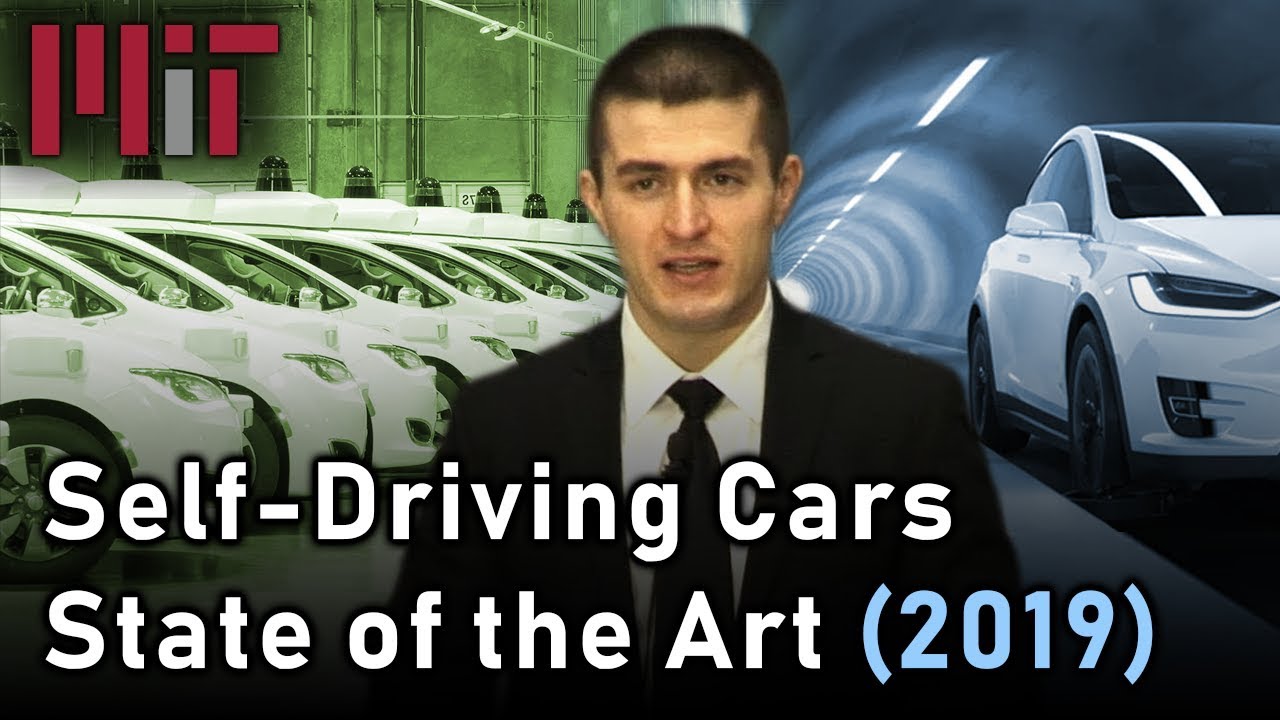
Lex Fridman — MIT researcher and lecturer on deep learning and autonomous vehicles, leading the MIT Human-Centered Autonomous Vehicle group.
The gist
In this solo MIT lecture, Lex Fridman reviews the 2018 landscape of autonomous vehicles and lays out the state of the art heading into 2019. He contrasts the two dominant strategies: Waymo's fully autonomous, LIDAR-and-mapping approach (10 million miles) versus Tesla's semi-autonomous, camera-and-deep-learning Autopilot approach (one billion miles). He argues the field underestimates how hard driving is and overestimates how bad humans are at it, drawing on his group's data from instrumented Tesla vehicles. He surveys deployment models, sensor fusion tradeoffs (camera, LIDAR, radar, ultrasonic), industry predictions, and emphasizes that adoption will hinge on human experience, not just safety.
Big reveals
- Waymo reached 10 million autonomous miles in October 2018, while Tesla Autopilot reached one billion semi-autonomous miles.
- Two fatalities in March 2018: Uber's pedestrian death in Tempe, Arizona and a Tesla Autopilot driver death in Mountain View.
- By raw numbers Tesla Autopilot appears three times safer than manual driving, but Fridman stresses three fatalities is statistically meaningless.
- Predictions span the 'Elon Rodney spectrum' — Musk says fully autonomous by 2019, Rodney Brooks says beyond 2050.
- Fridman's group instrumented 22 Teslas over two years; drivers used Autopilot for 34% of miles and stayed vigilant across 26,000 control transfers with no late responses.
- A sensor suite of camera, radar, and ultrasonic is roughly comparable in coverage to LIDAR, framing the core vision-vs-LIDAR debate.
Things worth remembering
- Every 23 seconds someone in the world dies in a car crash.
- Manually driven cars see about one fatality per 80 to 100 million miles.
- Fridman defines meaningful 'scale' as roughly 10,000 deployed vehicles; New York City has about 46,000 active Uber drivers.
- In the 2004 DARPA challenge no car finished; in 2005 four cars finished, and in 2007 CMU's 'Boss' won the Urban Grand Challenge.
- Over 70 years of human-factors research shows humans struggle to maintain vigilance monitoring a system, though Fridman argues lab results may not transfer to real driving.
- Humans have roughly 540 million years of evolutionary data behind their visual perception system.
- Ford F-150 is still the most popular car in America.
- A 3,000-person poll asked who will first deploy 10,000 driverless cars: Tesla 57%, Waymo 21%, someone else 14%, no one in 50 years 8%.