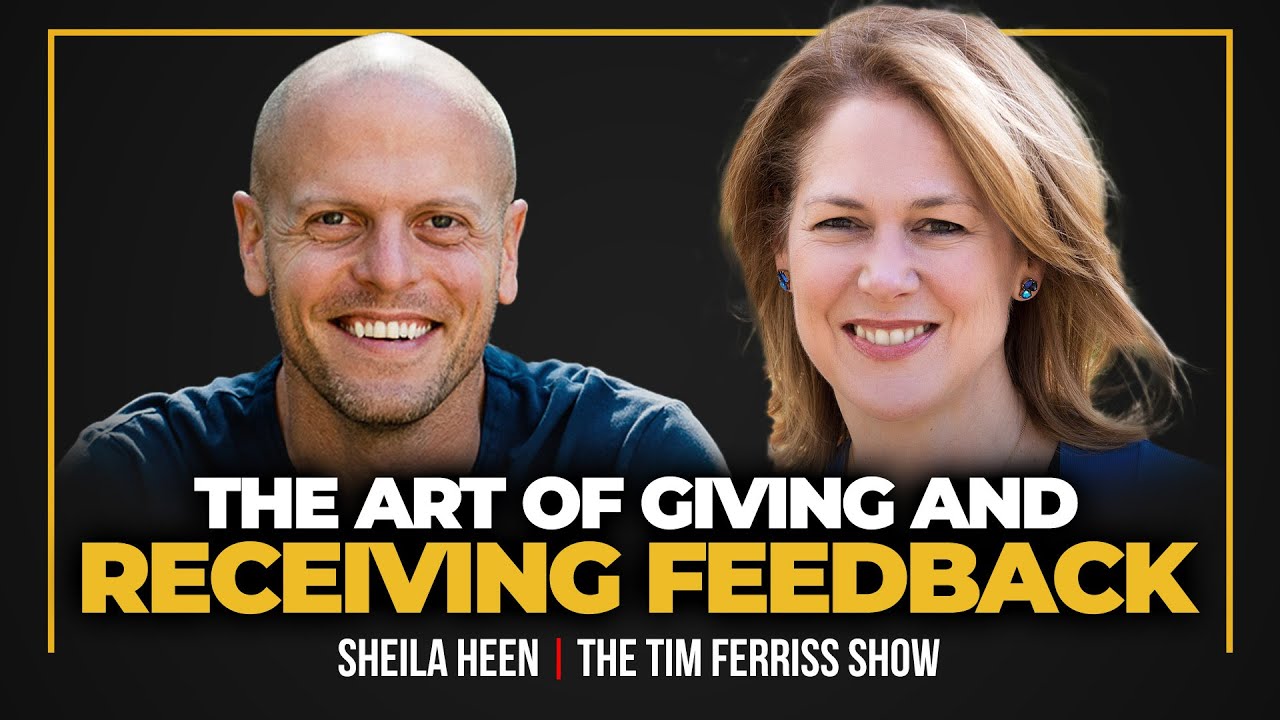
Sheila Heen — Harvard Law School professor, founder of Triad Consulting Group, and co-author of Thanks for the Feedback and Difficult Conversations; three decades specializing in difficult conversations and feedback.
The gist
Sheila Heen returns to the show to dig into how people can receive and give feedback well. She walks through frameworks like the three kinds of feedback (appreciation, coaching, evaluation / ACE), the three triggers (truth, relationship, identity), the 'phone a friend' supportive/honest mirror, and curiosity-driven questions that defuse defensiveness. Using a sexual-harassment example she cut from the third edition of Difficult Conversations after readers reacted strongly, she models contending with painful feedback on one's own work. The back half turns personal: Tim, newly single, asks how to read a partner's conflict style early, and they explore deal breakers, endless processing, eye-rolling, the Gottman Institute, and 'do I like who I am around this person.' They close on giving feedback as leaders, words of affirmation as a shared growth area, and feedback as a transferable meta-skill.
Big reveals
- Heen reveals the most negatively-received example in Difficult Conversations was a sexual-harassment story that was actually her own experience, leading them to cut it entirely from the third edition.
- A student told Heen that when they reached the harassment example, 'I threw the book across the room,' with readers accusing her of blaming the victim.
- Heen finally describes how she handled her real harassment situation: pulling the man aside to clearly state romantic interest wasn't reciprocated, which ended it.
- Heen lays out the central framework: three kinds of feedback we all need over time - appreciation, coaching, and evaluation (ACE).
- The 'phone a friend' tactic - asking a trusted friend to be first a 'supportive mirror' then an 'honest mirror' to surface the 10% of feedback that might be right.
- The three triggers behind feedback reactions: truth trigger (is it right?), relationship trigger (who's giving it?), and identity trigger (does it threaten who I am?).
- Research from the feedback work found people's sensitivity to feedback - how upset they get and how long recovery takes - can vary by up to 3,000 percent.
- Heen's blunt insight for leaders unsure what to improve: everyone around you already keeps a shared list of what's hard about working with you - you just have to ask for it.
Things worth remembering
- Triad's clients have included Pixar, American Express, the NBA, the Singapore Supreme Court, and the Obama White House.
- Heen's favorite cut-through question when receiving feedback: 'What do you feel like I don't get?'
- Tim removed a Bill Cosby epigraph about breaking industry rules from later printings of The 4-Hour Workweek after reader feedback.
- Author Steven Pressfield (The War of Art) coached Tim on early fiction drafts, deliberately giving appreciation ('keep going') rather than the harsh critique Tim asked for.
- Tim recounts weightlifting coach Jerzy Gregorek pinching his pec over black tea and flatly saying 'You are too fat' - feedback Tim accepted because of the coach's credentials.
- Tim credits the book Getting the Love You Want and its 'redo' and shared-language frameworks for handling relationship conflict.
- Per Gottman's research, about two-thirds of conflicts in long-term relationships are not resolvable - the task is to navigate them, not solve them.
- The Gottman Institute found eye-rolling (coded as contempt) is among the behaviors most closely correlated with relationships fraying and divorce.
- Tim identifies his ex's love language as words of affirmation, a 'weakness' he shares with Heen, who works on it via calendar reminders and specific written thank-you notes.
- Triad's website (triadconsultinggroup.com) has a 'Help Yourself' section with a 'How to get the best out of me' template for negotiating how someone prefers to receive feedback.
Recommended in this episode
Books, products and media the guest or host genuinely endorsed here — with the buy link.
Affiliate link — we may earn a commission at no extra cost to you.
Thanks for the Feedback: The Science and Art of Receiving Feedback Well (Even When It Is off Base, Unfair, Poorly Delivered, and Frankly, You're Not in the Mood)
Sheila Heen, Douglas Stone
“a co-author of Thanks for the Feedback: The Science and Art of Receiving Feedback Well... with Douglas Stone” — Tim Ferriss 00:00:33Find it on Amazon
Difficult Conversations: How to Discuss What Matters Most
Douglas Stone, Bruce Patton, Sheila Heen
“Difficult Conversations, subtitle, How to Discuss What Matters Most. Also with Douglas Stone and Bruce Patton, with a newly updated third edition” — Tim Ferriss 00:00:33Find it on Amazon
The 4-Hour Workweek
Tim Ferriss
“The 4-Hour Workweek came out in 2007, and there was a quote at the head of a chapter from Bill Cosby about breaking the rules” — Tim Ferriss 00:27:38Find it on Amazon
Getting the Love You Want
Harville Hendrix
“I have found the book Getting the Love You Want and some of the frameworks asking for redos, having a shared language... I think is super helpful” — Tim Ferriss 01:00:41Find it on Amazon