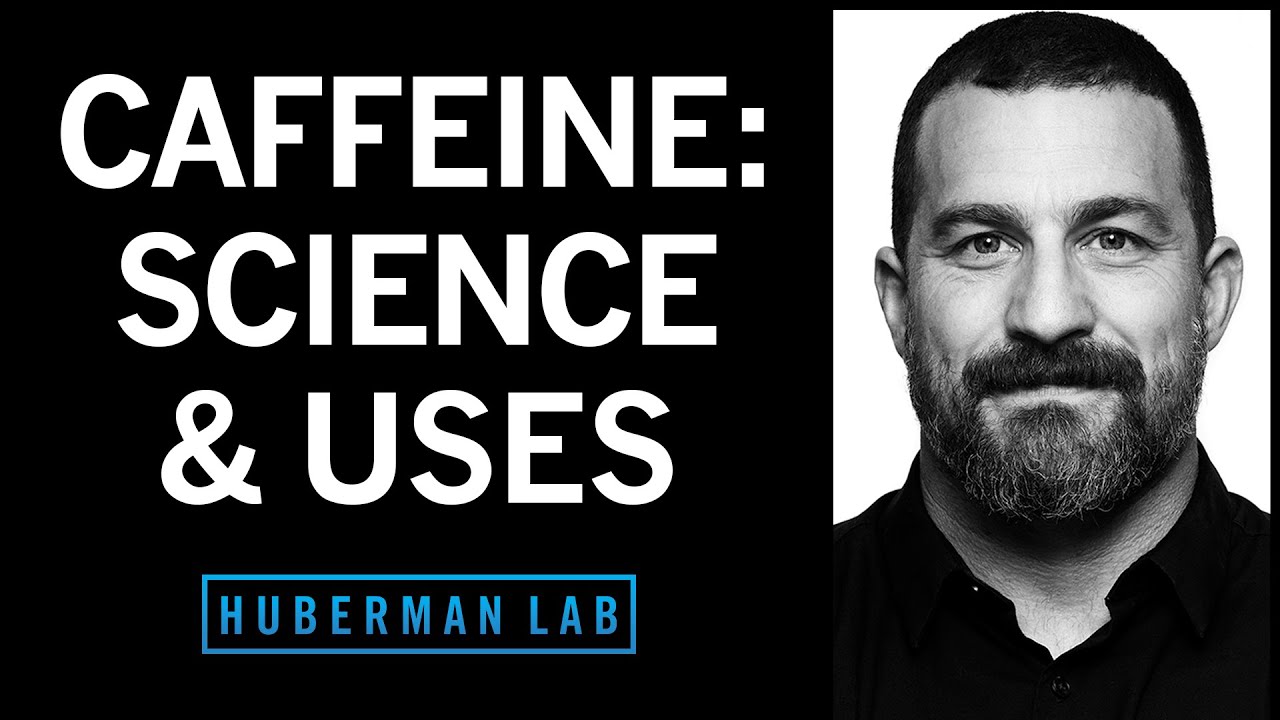
Andrew Huberman — Professor of Neurobiology and Ophthalmology at Stanford School of Medicine and host of the Huberman Lab podcast, where he translates neuroscience into practical, science-based tools.
The gist
This solo episode explains the mechanisms of caffeine in the brain and body, including its role as an adenosine antagonist and a subconscious reinforcer that makes us prefer the foods, drinks, containers, and even people associated with it. Huberman covers dosing (1 to 3 mg per kilogram of body weight), the benefits of delaying caffeine 90 to 120 minutes after waking to clear adenosine via a cortisol peak, and how morning sunlight and exercise amplify that effect. He details performance tools such as abstaining from caffeine for 2 to 20 days to maximize ergogenic effects, ingesting caffeine after learning to boost memory, and using theanine to offset jitteriness. He also reviews caffeine's neuroprotective, antidepressive, and pro-mood effects, debunks myths around osteoporosis and hormones, and warns about dopamine stacking and afternoon caffeine disrupting sleep.
Big reveals
- Yerba mate tea stimulates significant GLP-1 release, aiding weight loss by blunting appetite and converting white fat to thermogenic beige and brown fat.
- Cites a study showing bees prefer caffeine-laced nectar they can't even taste, proving caffeine acts as a subconscious reinforcer in nature.
- Recommends delaying caffeine intake to 90 to 120 minutes after waking to avoid the afternoon crash and let cortisol clear out residual adenosine.
- Reveals caffeine has a quarter-life of about 12 hours, meaning a noon coffee still has 25% of its effect bioactive at midnight.
- Spiking adrenaline by ingesting caffeine AFTER learning material dramatically improves memory retention for that material.
- Caffeine taken before exercise further increases dopamine release and reinforces the experience, making people who dislike exercise enjoy it more.
- Warns against dopamine stacking, ingesting energy drinks plus tyrosine plus music plus intense workouts too often, which drops dopamine baseline.
- Endorses an every-other-day caffeine schedule (e.g. only on resistance-training days) as the most rational way to maximize benefits without withdrawal.
Things worth remembering
- More than 90% of adults and as many as 50% of adolescents and teens use caffeine on a daily basis.
- Caffeine is a methylxanthine, a plant alkaloid, which is why pure caffeine tastes extremely bitter and aversive.
- Adenosine cannot be eliminated, only blocked; drinking caffeine merely borrows energy against fatigue you will inevitably feel later.
- Some commercial vendor coffees contain 400 to 600 mg of caffeine, and large sizes can reach 1 gram (1,000 mg).
- Getting bright morning light in your eyes within the first hour of waking increases the cortisol pulse peak by 50%.
- Theanine, found in green tea, is a non-protein amino acid that competes for glutamate receptors to blunt caffeine's over-alertness.
- James McGaugh documented medieval practices of throwing children into cold water after lessons to spike adrenaline and lock in memory.
- Naps of 90 minutes or less and NSDR can raise dopamine and restore alertness without any caffeine.
- Regular caffeine consumption is associated with reduced probability of developing Parkinson's and possibly Alzheimer's-related dementia.
- Caffeine combined with aspirin diminishes headaches, and caffeine can provide one to four hours of relief from minor asthma symptoms.
Recommended in this episode
Books, products and media the guest or host genuinely endorsed here — with the buy link.
Affiliate link — we may earn a commission at no extra cost to you.
Theanine (L-theanine)
“Many people opt to take 100 milligrams of theanine, T-H-E-A-N-I-N-E, theanine, as a way to offset some of that jitteriness. Theanine will reduce the jitteriness of caffeine.” — Andrew Huberman 01:07:54Find it on Amazon
Why We Sleep
Matthew Walker
“Dr. Matt Walker, who's an expert sleep researcher out of University of California Berkeley... author of the incredible book Why We sleep.” — Andrew Huberman 01:30:00Find it on Amazon
Caffeine: How Coffee and Tea Created the Modern World
Michael Pollan
“This was something that was actually covered in beautiful detail in a book by Michael Pollan all about caffeine. It's available on Audible. I really enjoyed that book.” — Andrew Huberman 01:39:03Find it on Amazon