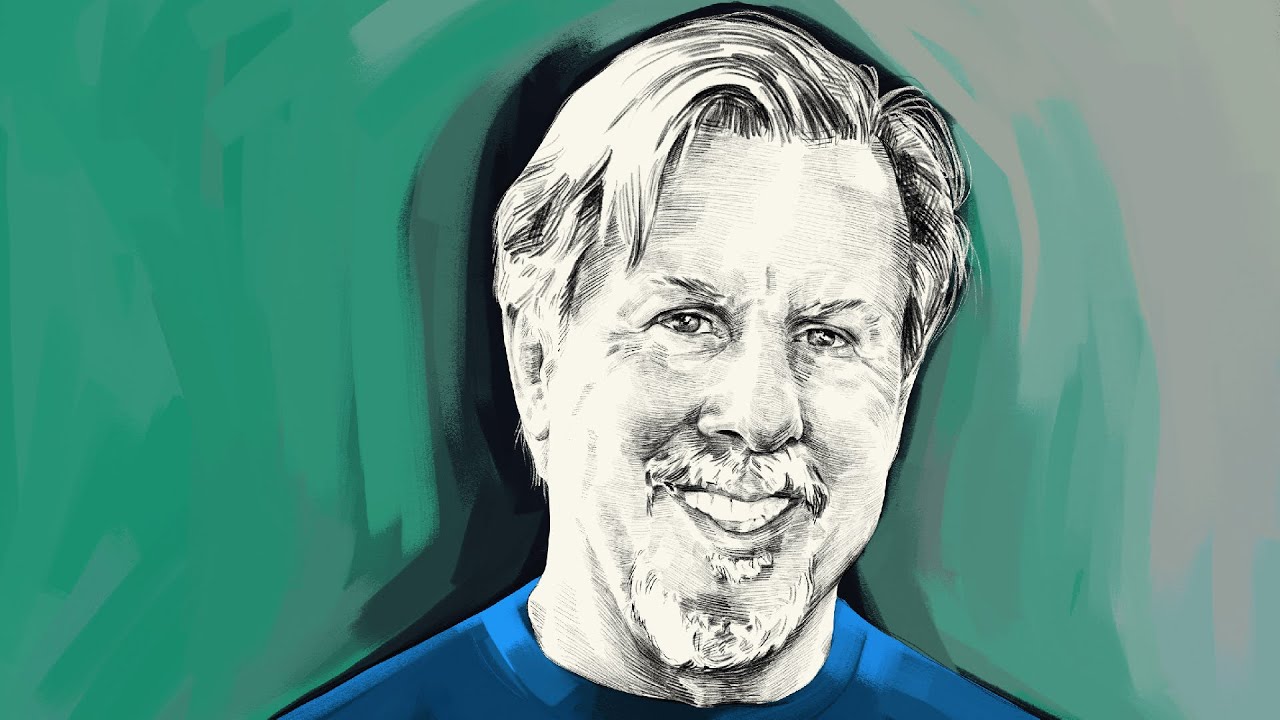
Richard Schwartz — Family therapist and Harvard Medical School psychiatry faculty member who developed the Internal Family Systems (IFS) model in the early 1980s. IFS is now an evidence-based form of psychotherapy widely used for trauma.
The gist
Tim Ferriss interviews Richard Schwartz, creator of Internal Family Systems (IFS) therapy, a non-pathologizing model that views the mind as composed of distinct 'parts' (exiles, managers, firefighters) overseen by a core, undamageable 'Self.' Schwartz recounts how he discovered the approach while working with bulimic and self-harming clients in the 1980s, learning that even destructive behaviors carry protective intentions. The centerpiece is a live, unscripted IFS demonstration in which Tim works through his anxiety and unburdens a wounded child part tied to his childhood abuse and bullying. They also explore IFS's parallels to psychedelic experiences, its application to suicidal ideation and couples conflict, and how it can become a daily self-led practice. Tim opens up for the first time about the aftermath of publicly disclosing his own history of sexual abuse.
Big reveals
- Tim discusses for the first time the consequences of his September episode disclosing childhood sexual abuse suffered from ages two to four at a babysitter's house.
- Seven or eight of Tim's roughly twenty close male friends reached out after the episode to confess they had been sexually abused and never told anyone.
- Schwartz describes the turning-point moment with a self-harming client when he said 'I give up' and the cutting 'part' replied it didn't want to beat him, shifting him from coercion to curiosity.
- Schwartz lays out the core IFS framework of exiles, manager protectors, and firefighters, with suicide often sitting at the top of the firefighter hierarchy.
- Schwartz begins a real, unscripted live IFS session with Tim, working with anxiety Tim locates in his throat and chest.
- In the live demo Tim transports back in time to be with his abused child self, unburdens the boy by putting feelings into fire, and brings in confidence.
- Schwartz explains his approach to suicidal clients: seeing suicide as just one part trying to stop pain, and offering to stop the mental 'loop' another way.
- Schwartz explains the 'protector war' dynamic in couples, where each partner's protective parts trigger the other's wounded exiles.
Things worth remembering
- Tim compares IFS for emotions to David Allen's 'Getting Things Done' system for work tasks.
- The Internal Family Systems model was born in the early 1980s and is now evidence-based, used for individuals, couples, families, corporations, and classrooms.
- Frank Anderson worked at Bessel van der Kolk's trauma center; van der Kolk authored 'The Body Keeps the Score.'
- Schwartz named the core 'Self' (capital S), describing eight C-word qualities: calm, curiosity, confidence, compassion, courage, clarity, creativity, and connectedness.
- In Michael Mithoefer's MDMA phase-one trials with PTSD patients, over 70 percent spontaneously began doing IFS-style work without any coaching.
- Tim reveals he was severely bullied as a very small kid until about sixth grade, on top of the earlier sexual abuse.
- After the live session, Tim reports the constriction in his throat dropped from a volume of eight to two or less.
- Schwartz uses the term 'trailheads' for symptoms that, when followed, lead to the part needing healing, and cites Gabor Mate's 'why the pain, not why the addiction.'
- Schwartz cites an Indian saying: 'When the water buffalo battle in the marsh, it is the frogs who suffer,' describing collateral damage in couples conflict.
- Schwartz's resources include the IFS Institute website, his books 'Introduction to IFS' and 'You Are the One You've Been Waiting For,' and his Sounds True audio course 'Greater Than the Sum of the Parts.'
Recommended in this episode
Books, products and media the guest or host genuinely endorsed here — with the buy link.
Affiliate link — we may earn a commission at no extra cost to you.
The 4-Hour Body
Tim Ferriss
“i recommended it in fact in the four hour body this is more than ten years ago and i did not get paid to do so” — Tim Ferriss 00:02:03Find it on Amazon
Getting Things Done
David Allen
“getting things done by david allen incredible system david's been on the podcast is excellent for getting rid of all the stuff” — Tim Ferriss 00:04:39Find it on Amazon
You Are the One You've Been Waiting For
Richard Schwartz
“i've written two of them one's called an introduction to ifas and the others you're the one you've been waiting for which is more about relationships” — Richard Schwartz 01:36:52Find it on Amazon
Introduction to Internal Family Systems
Richard Schwartz
“i've written two of them one's called an introduction to ifas and the others you're the one you've been waiting for” — Richard Schwartz 01:36:52Find it on Amazon
Greater Than the Sum of the Parts
Richard Schwartz
“i did a audio course on sounds true called greater than the sum of the parts that contains a lot of exercises that people like a lot so i'd recommend that” — Richard Schwartz 01:37:23Find it on Amazon
The 4-Hour Workweek
Tim Ferriss
“just go to four hourworkweek.com that's 4hourworkweek.com all spelled out and just drop in your email” — Tim Ferriss 01:43:38Find it on Amazon