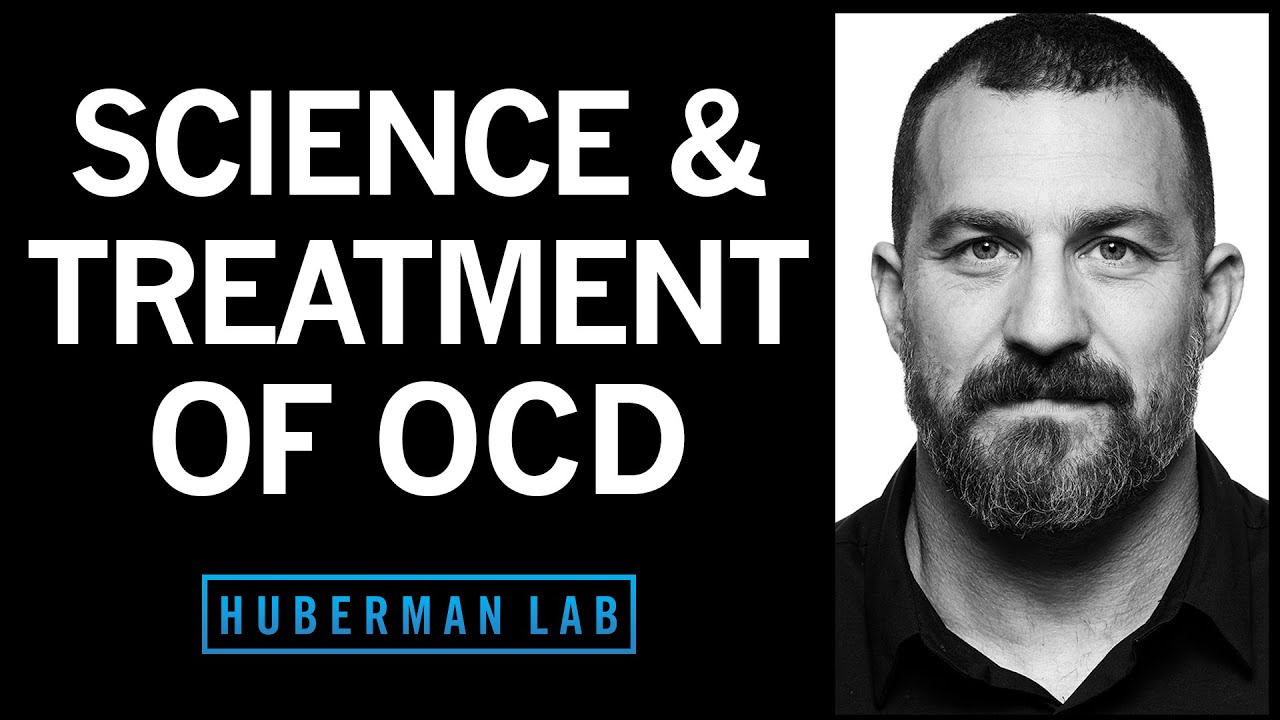
Andrew Huberman — Professor of neurobiology and ophthalmology at Stanford School of Medicine and host of the Huberman Lab Podcast. This is a solo episode with no outside guest.
The gist
In this long solo episode, Huberman explains the difference between clinically diagnosable obsessive-compulsive disorder (OCD) and the far milder obsessive-compulsive personality disorder. He details the cortico-striatal-thalamic brain loop that drives intrusive obsessions and the compulsions meant to relieve them, and why performing the compulsion actually strengthens the obsession. He then walks through evidence-based treatments: exposure-based cognitive behavioral therapy, SSRIs, neuroleptics, and emerging options like ketamine, psilocybin, cannabis, and transcranial magnetic stimulation. He closes with the roles of hormones, holistic options like inositol and mindfulness, and how superstitions sit on the same predictive-brain continuum.
Big reveals
- Most people who say they are 'OCD' actually have obsessive-compulsive personality disorder, which lacks the intrusive, unwanted thought component of true OCD.
- The core counterintuitive mechanism: performing a compulsion gives only brief relief and then makes the obsession stronger, like scratching an itch that intensifies.
- Exposure-based CBT for OCD aims to make patients feel MORE anxiety, not less, then prevent the ritual so they learn to tolerate it.
- In the cited study, CBT alone was more effective than SSRIs, and combining them from the outset added no extra benefit over CBT alone.
- However, adding CBT for people already on SSRIs DOES further reduce symptoms, which matters because most patients get drugs first.
- Despite SSRIs working, there is little to no evidence the serotonin system is actually disrupted in OCD.
- A placebo-controlled study found smoked cannabis (THC or CBD) had little impact on OCD symptoms, likely because cannabis increases focus on the obsession.
- Huberman admits a childhood grunting tic that still resurfaces when exhausted, and openly wonders aloud if he could be 'accused' of OCPD.
Things worth remembering
- OCD is ranked number seven on the list of most debilitating illnesses of any kind, not just psychiatric ones.
- An estimated 2.5% to as high as 3-4% of people suffer from true OCD, with many cases hidden out of shame.
- Ramones member Joey Ramone reportedly had to walk up and down hotel stairs a specific number of times before leaving.
- A 2013 Science study by Susanne Ahmari in Rene Hen's lab triggered OCD-like incessant grooming in mice by stimulating the cortico-striatal circuit.
- Substance abuse (alcohol, cannabis, other narcotics) is very common in OCD as people try to suppress the anxiety.
- A neurosteroid study found elevated cortisol and DHEA in females with OCD and elevated cortisol with reduced testosterone in males, both funneling to lower GABA.
- Mindfulness meditation seems to help OCD only indirectly, by improving focus on CBT homework rather than directly relieving symptoms.
- The Pinto study showed people with OCPD are unusually GOOD at delaying gratification, which can make them excel at precise professions like architecture or surgery.
- Bence Olveczky's research shows both pitchers and rats add irrelevant motor patterns to learned sequences, the basis of superstition.
- Huberman reports taking 900 mg of myo-inositol for sleep and anxiety, noting most studies used very high doses up to 12-18 grams that caused gastric distress.
Recommended in this episode
Books, products and media the guest or host genuinely endorsed here — with the buy link.
Affiliate link — we may earn a commission at no extra cost to you.
Jiro Dreams of Sushi
David Gelb
“I think that movie, what is it? Jiro Dreams of Sushi? That movie is incredible.” — Andrew Huberman 02:18:21Find it on Amazon
Inositol (myo-inositol)
“I must say the sleep I've been getting on inositol is extremely deep and does seem to lead to enhanced levels of focus and alertness during the day.” — Andrew Huberman 02:07:21Find it on Amazon
Magnesium Threonate
“my existing toolkit for sleep, which I've talked about many times on this podcast and other podcasts, consists of magnesium threonate, apigenin, and theanine.” — Andrew Huberman 02:06:50Find it on Amazon
Apigenin
“my existing toolkit for sleep ... consists of magnesium threonate, apigenin, and theanine.” — Andrew Huberman 02:06:50Find it on Amazon
Theanine
“my existing toolkit for sleep ... consists of magnesium threonate, apigenin, and theanine.” — Andrew Huberman 02:06:50Find it on Amazon