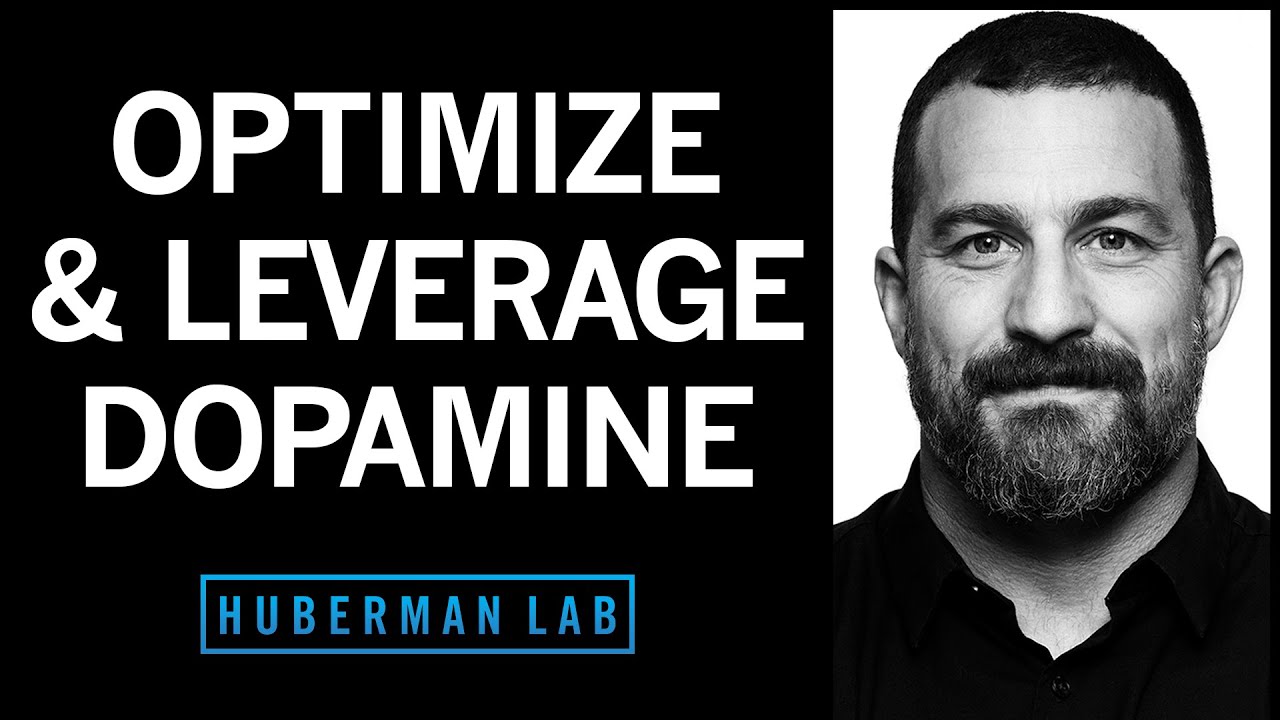
Andrew Huberman — Professor of neurobiology and ophthalmology at Stanford School of Medicine and host of the Huberman Lab podcast. This is a solo episode.
The gist
In this solo episode, Huberman breaks down dopamine not as a pleasure molecule but as the neuromodulator of motivation, drive, and pursuit. He explains the five dopamine circuits, focusing on the mesocortical pathway, and introduces 'dopamine dynamics': peaks, troughs, and baseline visualized as a wave pool. Using addiction as the extreme case, he shows how fast, steep dopamine peaks create deep troughs that drive craving. He then offers tools to raise and protect baseline dopamine (sleep, NSDR, sunlight, exercise, cold exposure, L-tyrosine) and warns against stacking dopamine-boosting substances onto activities you already enjoy. The payoff is a counterintuitive procrastination cure: deliberately doing something harder or more painful to steepen the trough and rebound to a higher baseline faster.
Big reveals
- The drop in dopamine BELOW baseline after a peak, not the peak itself, is what triggers motivation and pursuit.
- The steeper and higher a dopamine peak, the deeper the trough that follows it afterward.
- Huberman highly recommends Dr. Anna Lembke's book Dopamine Nation as a fascinating exploration of dopamine and addiction.
- The classic gold-star experiment: rewarding kids for drawing they already loved made them want to do it less once rewards stopped.
- Personal admission: stacking caffeine, yerba mate and supplements onto exercise and science he loved drained his enthusiasm for both.
- The 'Holy Grail' of motivation is making effort and friction become the reward itself.
- Counterintuitive procrastination fix: do something harder/more painful to steepen the trough and rebound to baseline faster.
Things worth remembering
- Huberman cites an 80% increase in alcohol use disorder among women over the last 30 years.
- Baseline dopamine neurons fire about 3-4 times per second; anticipating food roughly doubles that rate.
- Nicotine raises dopamine firing ~150%, cocaine ~1000% (tenfold), and methamphetamine from 1000% up to 10,000%.
- NSDR / Yoga Nidra has been shown to increase dopamine reserves by up to 65%.
- Cold-water exposure up to the neck can raise baseline dopamine and keep it elevated for two to five hours.
- Resetting dopamine circuitry in addiction recovery often requires about 30 days of complete abstinence.
- Studies used 100 mg/kg of L-tyrosine, which for Huberman would be 10 grams; he recommends only 250-1500 mg.
- Morning sunlight raises both cortisol and dopamine, supporting daytime mood, alertness, and nighttime sleep.
- 'Adrenal burnout' does not exist, though adrenal insufficiency syndrome from overstimulation is real.
Recommended in this episode
Books, products and media the guest or host genuinely endorsed here — with the buy link.
Affiliate link — we may earn a commission at no extra cost to you.
Dopamine Nation
Anna Lembke
“this was discussed in my colleague Dr Anna lemke's book dopamine nation and on this podcast excellent book by the way I highly recommend it” — Andrew Huberman 01:09:43Find it on Amazon