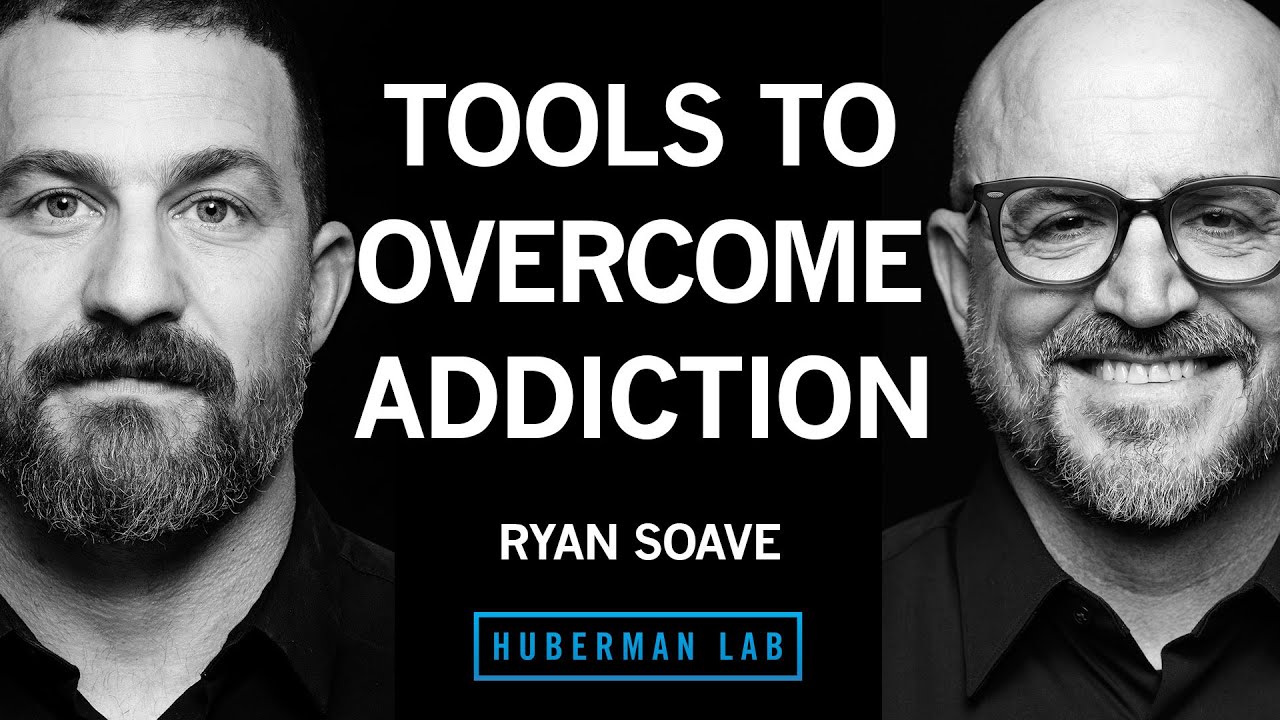
Ryan Soave — Addiction treatment and trauma recovery expert who serves as Chief Clinical Officer for Guardian Recovery, with decades of clinical work treating substance and behavioral addictions including alcohol, drugs, gambling, video games, and pornography.
The gist
Andrew Huberman and Ryan Soave explore what addiction really is, framing it not as the problem but as a person's attempted solution to underlying stress, trauma, and discomfort. They discuss how to tell whether something 'has you' versus you having it, and walk through the neuroscience and psychology of why people chase a feeling. The core theme is distress tolerance: humans confuse discomfort with threat and react to it as life-or-death, and recovery means learning to feel bad and lean into discomfort rather than escape it. Soave shares concrete zero-cost protocols including an 'emotional weather map' daily inventory, yoga nidra / NSDR, breathwork, cold exposure, and community-based programs like 12-step. They examine specific addictions (alcohol, gambling, stimulants, pornography, sugar, stress) and close with practical guidance on getting help and supporting a struggling loved one.
Big reveals
- Soave reframes addiction: 'addiction is not the problem, it's the solution' to an underlying stressor.
- Admits the core of his work is to 'help them learn how to feel bad' — building distress tolerance, something they don't put on the website.
- Huberman argues dopamine is deployed for the pursuit of reward, not the reward itself, explaining why a billionaire who sold his company felt deeply depressed.
- Soave's central thesis: humanity's biggest psychological challenge is confusing discomfort with threat and responding to discomfort as if it's danger.
- Huberman reveals he renamed the ancient practice of yoga nidra as 'non-sleep deep rest' (NSDR) to get more people to do it, and took heat for it.
- Soave discloses he has personally been sober for a long time and describes the social stigma of not drinking.
- Soave says porn addiction was reported to have the same impact on young men's brains as crack cocaine, and discusses combat veterans wiring sex and violence together.
- Discusses Ibogaine trials showing 40–80% remission rates from alcohol/substance use disorders with one or two sessions plus therapeutic support.
Things worth remembering
- Dr. Silkworth, who supported AA's founders, wrote that people drink 'because they like the effect produced by alcohol' — and that effect is relief.
- US opioid deaths have more than doubled since it was first called an 'epidemic,' rising from ~50,000 to at least 100,000 per year.
- The freezing response under stress is an active behavior, not passive — per a 2018 Nature paper from Huberman's lab (Lindsay Cle).
- After an adrenaline response hits, the forebrain shuts down for about 20 seconds; riding out those 20 seconds prevents impulsive bad decisions.
- EMDR was discovered by Francine Shapiro while walking behind Stanford in Palo Alto, noticing distress faded with eye movement during a walk.
- A resting practice like NSDR has been shown to increase endogenous dopamine by around 65%.
- Alcoholics Anonymous is a flat, leaderless, politically unaffiliated organization with a vow of poverty — it won't accept more than ~$10,000 even from a bequest.
- AA grew from one decision in the 1930s when Bill Wilson chose the phone over the bar at the Mayflower Hotel, leading to meeting Dr. Bob Smith.
- The HALT acronym — Hungry, Angry, Lonely, Tired — names the states that put people at highest risk of relapse.
- In rat studies, cocaine self-administration dropped significantly when sugar was also available.
Recommended in this episode
Books, products and media the guest or host genuinely endorsed here — with the buy link.
Affiliate link — we may earn a commission at no extra cost to you.
The Comfort Crisis
Michael Easter
“Michael Easter's book Comfort Crisis is great. You know, it's it's like, you know, we used to walk like 10 miles a day” — Andrew Huberman 02:30:58Find it on Amazon