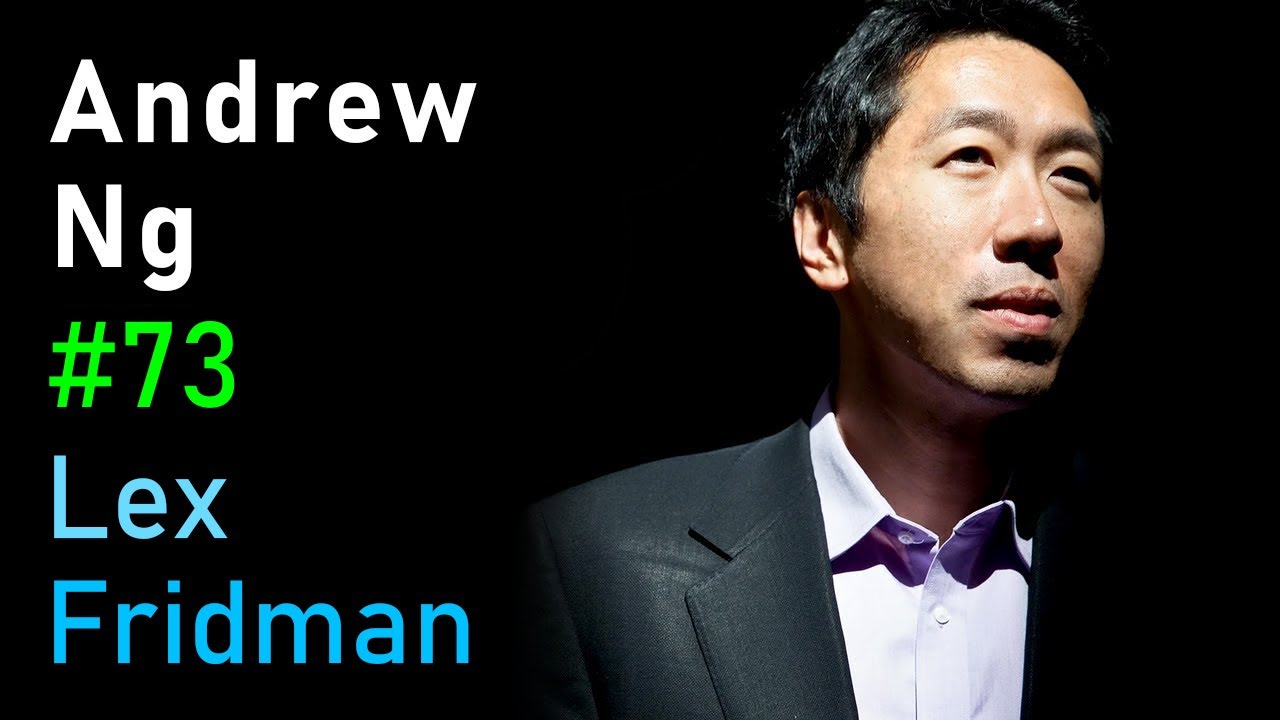
Andrew Ng — AI researcher, educator, and entrepreneur who co-founded Coursera and Google Brain, was chief scientist at Baidu, and founded DeepLearning.AI, Landing AI, and the AI Fund. A Stanford professor whose courses have taught machine learning to millions.
The gist
Andrew Ng traces his path from learning to code as a child in Hong Kong and Singapore to building the first MOOCs and Coursera, recorded alone late at night to reach hundreds of thousands of learners. He reflects on early deep learning bets, getting unsupervised learning wrong but the importance of scale right, and the controversy around founding Google Brain. Much of the conversation focuses on the gulf between research and real-world deployment, especially the small, messy data problems his teams face in manufacturing, agriculture, and healthcare. He gives practical advice on learning habits, careers, choosing teams over logos, and building startups customer-first. He closes by arguing that near-term AI problems like bias and wealth inequality deserve more attention than distant AGI fears.
Big reveals
- Ng admits the thing they got wrong in early deep learning was overemphasizing unsupervised learning over supervised learning.
- Geoff Hinton sketched a napkin argument about brain synapses and bits-per-second that convinced Ng unsupervised learning had to matter.
- A single chart Adam Coates generated showing bigger models perform better gave Ng the conviction to pitch Google Brain and chase scale.
- Well-meaning friends told Ng that betting on scale over architecture was a bad career move before it became popular.
- Ng concedes there are still very few great examples of deployed real-world reinforcement learning applications.
- A factory mouse running through and pooping on equipment changed conditions and broke their algorithm, illustrating real-world fragility.
- Ng says he would love to reach AGI but cannot estimate whether it takes 100, 500, or 5,000 years.
- Ng calls the AGI paperclip/alignment problem a huge distraction from harder problems like bias and wealth inequality we face today.
Things worth remembering
- Ng filmed many of his early Coursera videos between 10pm and 3am, often alone with a Logitech webcam and Wacom tablet.
- Ng's bedrock principle was always to do what's best for learners and forget everything else.
- A feature letting two people log in and watch together flopped because learners prefer studying alone at their own pace.
- Pieter Abbeel was Ng's first PhD student, working on reinforcement learning to fly helicopters upside down.
- The team solved helicopter localization only after putting cameras on the ground, since upside-down GPS couldn't see satellites.
- Factory inspectors often disagree with each other and even with themselves on the same defective part within a single day.
- Handwritten notes boost retention because handwriting is slower, forcing you to recode knowledge in your own words.
- Ng advises choosing a job by who your manager and peers are, not by the company's logo above the door.
- A McKinsey study estimated $13 trillion of global economic growth from AI, much of it outside the software internet sector.
- Ng's first internal Google Brain customer was the speech team, deliberately starting small to build faith in deep learning.
Recommended in this episode
Books, products and media the guest or host genuinely endorsed here — with the buy link.
Affiliate link — we may earn a commission at no extra cost to you.
A Cent of Money
unknown
“let me mention that cryptocurrency in the context of the history of money is fascinating I recommend a cent of money as a great book on this history” — Lex Fridman 00:01:01Find it on Amazon
Deep Learning Specialization
DeepLearning.AI
“the deep learning specialization offered by today is is this I think one it was called service specialization it might still be so it's very popular” — guest 00:34:26Find it on Amazon